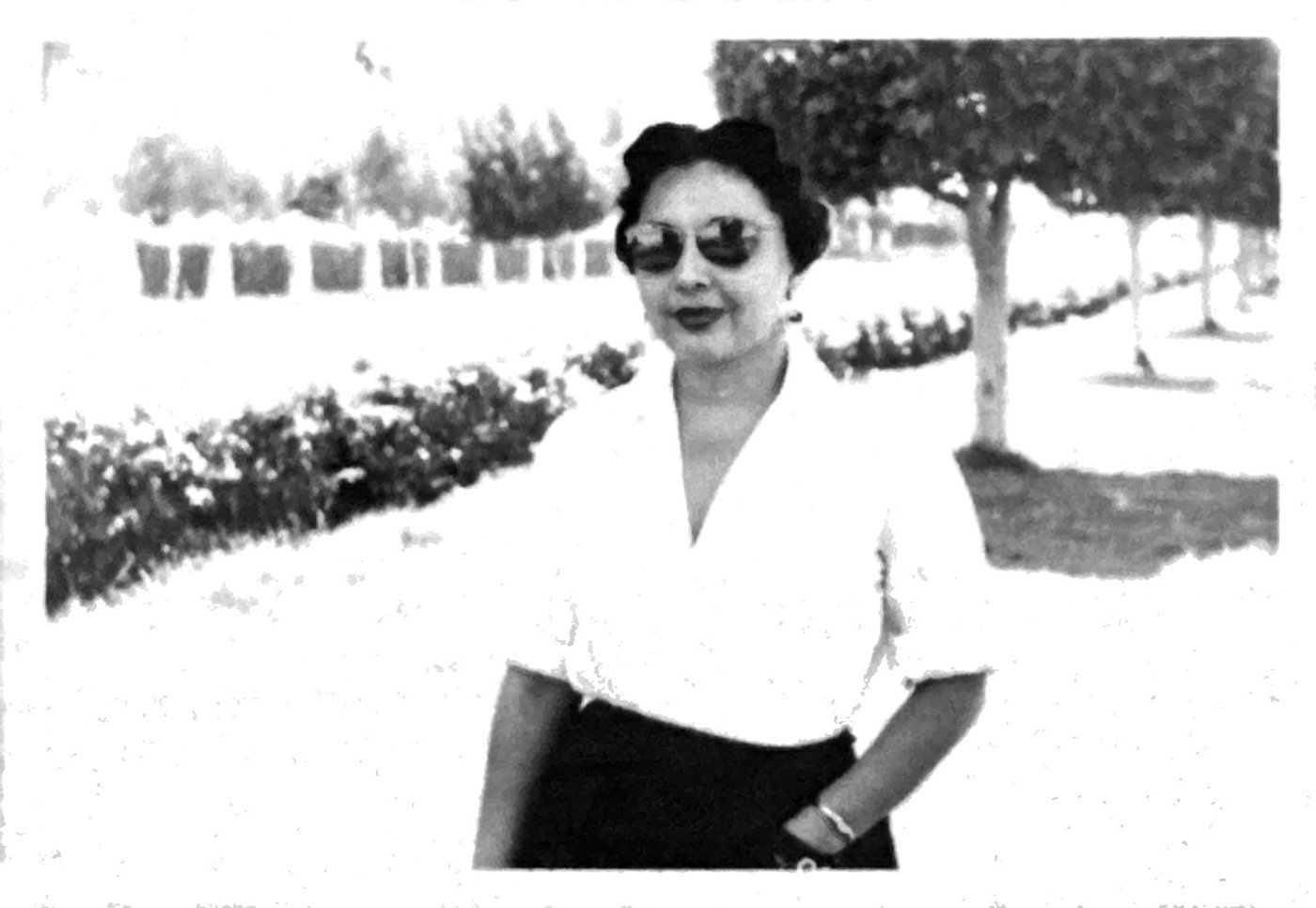
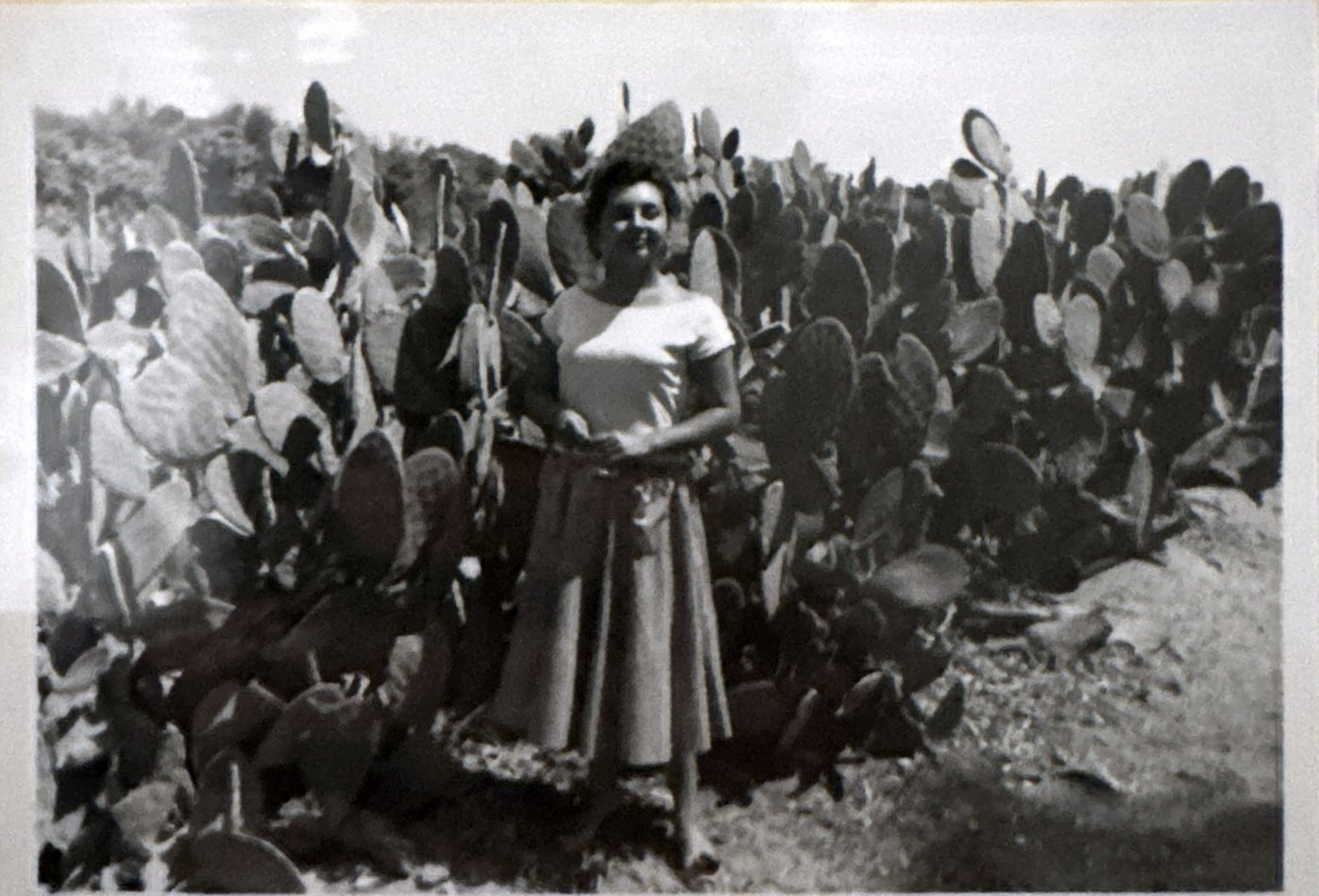
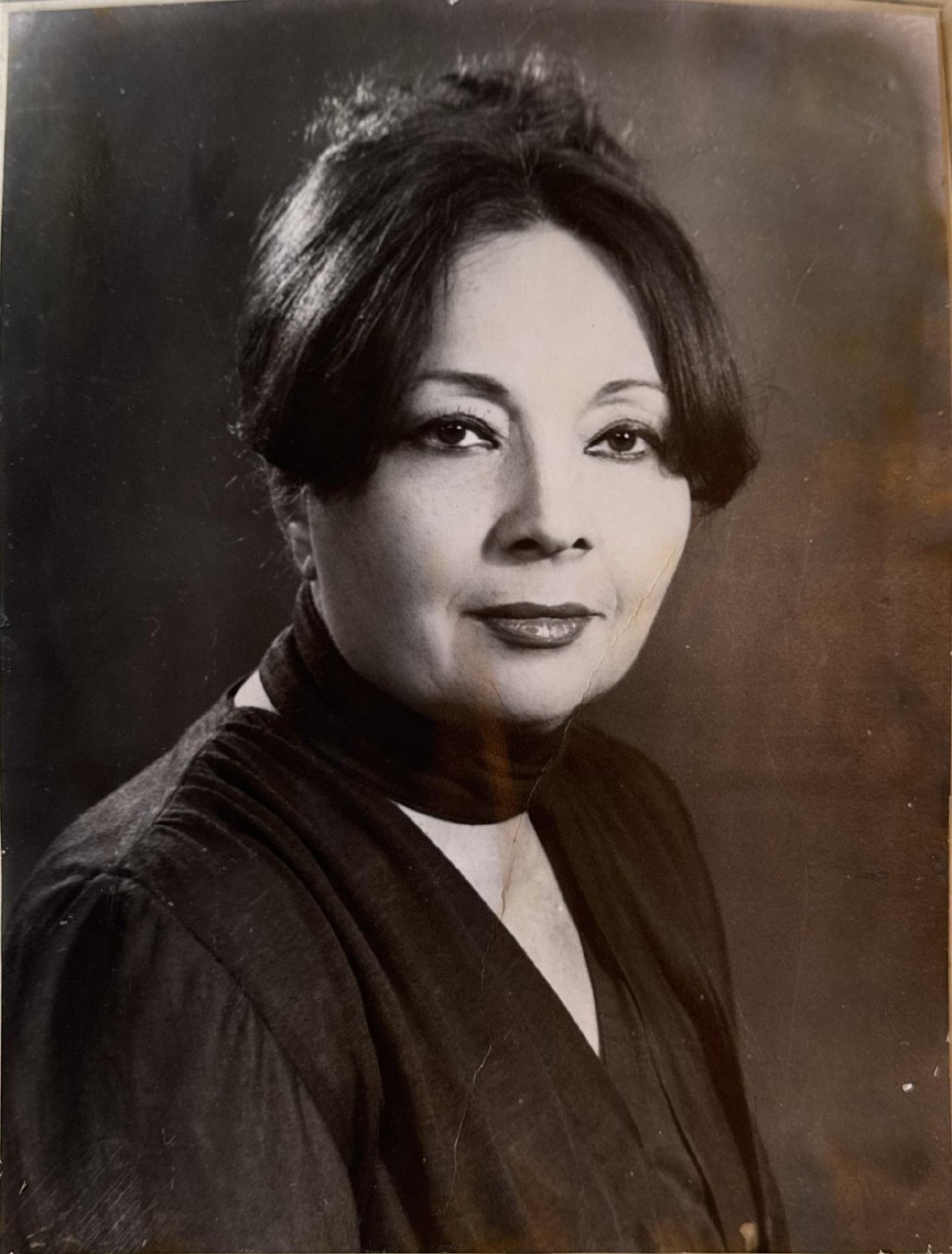
Armenouhi Jamgotchian was born in Heliopolis, the north-eastern district of Cairo, on 15 June 1927. Her father, Hagop Bohdjalian, gave her the name by which she became known in Cairene artistic circles during the 1970s and 1980s — Armenouhi Yacoub, "Yacoub" being the Arabic form of "Hagop," following the regional custom of naming a person after their father.
She was educated at the Noubarian Armenian School in Heliopolis from 1930 to 1939, where her art teacher was Simon Shahrikian (1911–1989), and completed her secondary schooling at St. Claire's English School, Heliopolis, from 1939 to 1944. Her early enthusiasm for art sharpened into serious intent only after leaving St. Claire's, when friends encouraged her toward the private studio of Ashod Zorian (1905–1979) — a respected artist and teacher working independently in Cairo.
Jamgotchian studied under Zorian intermittently between 1954 and 1967 — roughly four to five years in total, spread across more than a decade. The gaps were a matter of family life rather than diminished commitment: she married Hagop Jamgotchian in Cairo on 15 January 1956, and the couple had two children, Perla (born 25 December 1956) and Raffi (born 21 August 1960).
This apprenticeship placed her within what is now recognized as the fourth generation of Armeno-Egyptian painters — the direct disciples of Zorian, several of them women born in the late 1920s and 1930s who each built an individual style without straying far from the subjects and forms he taught: portraiture, landscape, and flowers in a vase. Zorian's own approach, a stylized realism carrying occasional expressionist inflections, remained visible in her work throughout her career.
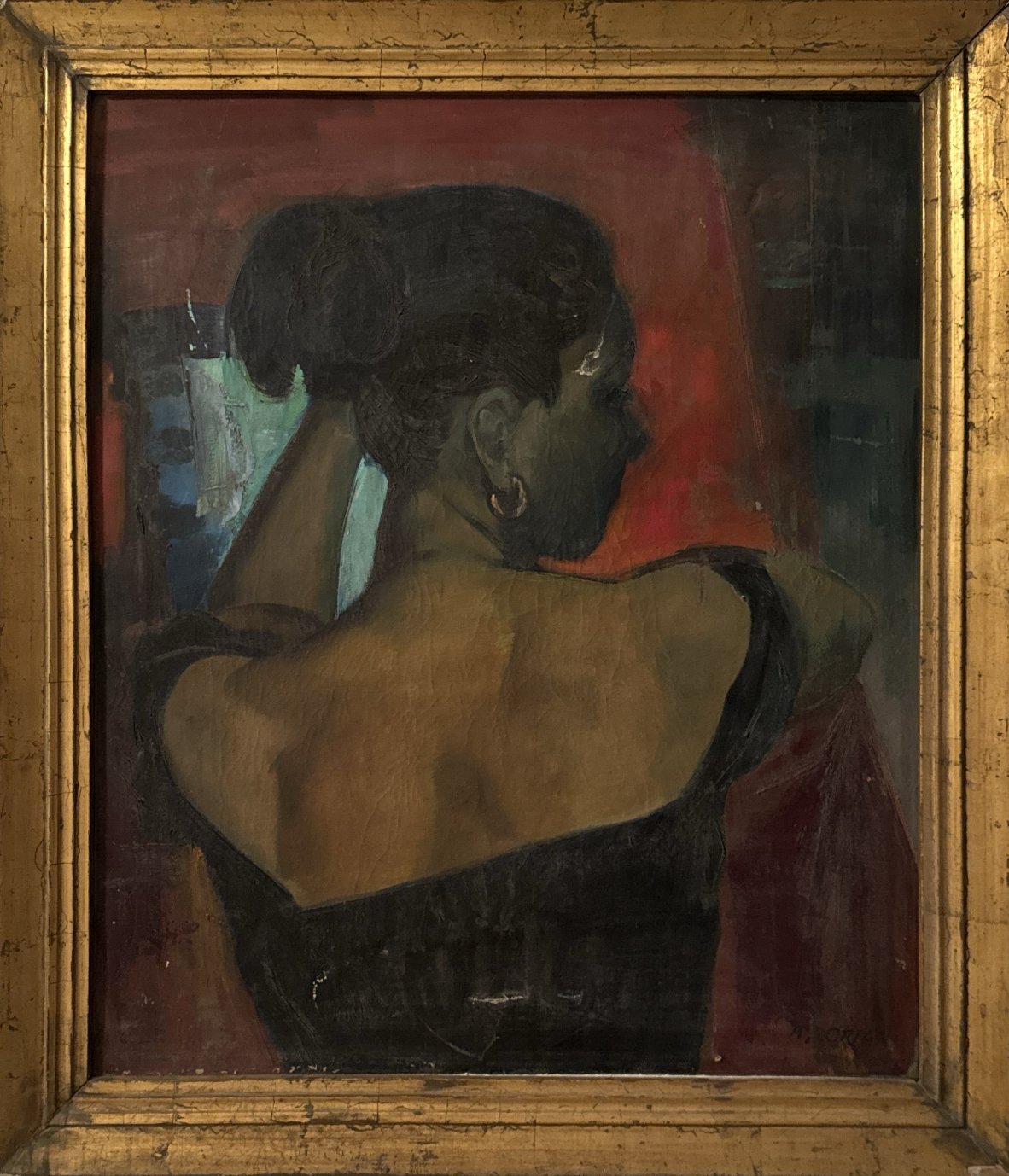
Among the works the family holds is a portrait of Armenouhi herself, painted by her teacher Ashod Zorian and signed by him at lower right. A portrait of the pupil by the master she studied under for more than a decade says a good deal about where she came from.
Alongside her studio training, Jamgotchian pursued two years of formal art study at the Ecole A.B.C. de Paris, receiving her diploma on 9 December 1968. That same year she travelled with her family through the Soviet Union, visiting the museums of Moscow, Leningrad and Yerevan — an encounter with both classical collections and the Armenian landscape that would later surface in some of her most successful paintings. In 1969 she travelled again, through the United States, Canada and Europe, further broadening the visual vocabulary she brought back to Cairo.
Returning to Cairo, Jamgotchian began exhibiting publicly: first in a group show of Middle Eastern Armenian artists at the Fenicia Hotel, Beirut, in June 1970, then in a 1973 group exhibition at Cairo's Carzou Gallery alongside five other Armeno-Egyptian painters.
Her true arrival as a mature artist came in 1974, when she exhibited 32 paintings in a solo show at the Ekhnaton Gallery in Cairo, inaugurated on 8 July by Yousef el-Sebai, then Egypt's Minister of Culture and a noted writer in his own right. The exhibition drew substantial critical attention: pieces were written about her and her work by Kamal al-Goueli in Al Mesaa, Antoine Gennaoui in the Journal d'Egypte, Gaidz Goganian in Houssaper, Sarkis Balayan in Tchahakir, and by Al. Saroukhan, Avedis Yapoudjian, Hagop Hampigian and Hagop Shahnur in Arev — the leading Armenian dailies and weeklies of the city.
From 1974 onward, Jamgotchian exhibited regularly in Cairo's group shows — among them ten exhibitions of Armeno-Egyptian artists' work, the Annual General Exhibitions of Plastic Arts, the Salons d'Automne, and shows by the el-Ghouri artistic grouping. In 1980 she was admitted to the Syndicate of Plastic Arts, Cairo, and the following year held her second solo exhibition: a two-day show at the Dikran Yergat Armenian Cultural Club in Alexandria, inaugurated 12 April 1981, presenting 35 paintings including landscapes and several female portraits — among them her portrait of Egypt's First Lady, Jihan el-Sadat, widely regarded as one of her most successful works.


Her last documented public participation came in November 2009, when four of her paintings were included in a large exhibition of Armeno-Egyptian artists' work at the el-Hanager Art Center, Cairo, marking the birth centenary of painter Puzant Godjamanian.
Jamgotchian is remembered for her landscapes — particularly those drawn from her travels through Armenia — and for flower paintings that at times moved toward a semi-abstract style. A 2002 self-portrait, painted as she depicted herself as a young woman, is counted among her finest works, alongside two portraits of her daughter Perla. Across the body of work, a consistent sensibility recurs: a delicate, lyrical touch that critics of her time repeatedly singled out as the signature of her hand.
Portraits, landscapes and flower studies spanning six decades.